Thompson Park News
Upper Arlington City Schools Reaffirms Commitment:
Hastings Will Remain on Its Current Site — No Relocation to Thompson Park
February 21, 2026
At community engagement sessions held this week at the Bob Crane Community Center, Upper Arlington City Schools Superintendent Dr. Robert Hunt reaffirmed the district’s commitment that Hastings Middle School will remain on its current campus and will not be relocated to Thompson Park.
The district’s updated Phase II Facilities Master Planning materials maintain the position adopted last year: all active options under consideration for Hastings are confined to the existing school site. There are no scenarios involving relocation to Thompson Park or any other off-site parcel.
Earlier land-swap concepts that could have impacted Thompson Park were formally removed from consideration due to cost, complexity, and community concerns. The district’s current planning documents reflect that decision and contain no off-site relocation proposals.
For residents who value the preservation of Thompson Park as public green space, this reaffirmation provides important clarity. Upper Arlington City Schools continues to focus exclusively on on-site solutions for Hastings while addressing the broader facility needs of the district.
Additional information regarding the Phase II Facilities Master Plan, including details specific to Hastings, is available at:
https://www.uaschools.org/our-district/facilities-master-planning
Friends of Thompson Park appreciates the district’s continued recognition of community input and remains committed to preserving Upper Arlington’s limited green space — including its largest city park.
November 2025 Election Update
UPDATED Sunday November 2, 2025
Subject: Update on the Upcoming Election – Candidate Thoughts on UA Parks
We haven’t been in touch for a couple of months and wanted to share an update ahead of the election next Tuesday, November 4, 2025. The community will be electing four members to City Council and two members to the Upper Arlington City School Board of Education.
Recently, we reached out to all candidates to ask for their views on the development of City parks. Each candidate was invited to respond to the same four questions, with the understanding that their responses would be published here exactly as submitted. For those who did not respond by the requested deadline, we have noted “No Response Received.”
Below are the responses from City Council candidates, listed in the order they were received.
We hope this information is helpful as you consider your voting options next week. FOTP greatly appreciates our City Council and School Board Candidates who have responded to our questions during this election season.
Thank you, as always, for your continued support of Thompson Park and for everything you do to protect and preserve green spaces in Upper Arlington.
City Council Candidates Views of City Park Development
Laura Oldham
Parks, shared spaces, sustainability and connection with nature are all major throughlines in my platform and beliefs, so I'm happy to send you answers amid the chaos of the final week before Election Day.
1. FOTP: Under what circumstances, if any, would you support a plan to build a school in Thompson, Northam, or Fancyburg Parks? Please explain.
I cannot imagine any circumstance in which I would support moving a school (or anything else for that matter) to one of our parks.
2. FOTP: What are your priorities for preserving existing green space in Upper Arlington? What do you consider to be appropriate development or enhancement within UA city parks?
I see a lot of opportunity for increased signage to educate on different types of biodiversity and natural areas in our parks. For example, we can add signage explaining the important role a wetland or a vernal pool serves in a healthy ecosystem. Protecting our current green spaces and weaving additional green corridors throughout Upper Arlington to prioritize people and planet are important pieces that I'd love to include in our upcoming Master Plan process. As a current member of our City Tree Commission, I know that we're also in the process of updating our Tree Treks to encourage additional connections with our parks and the well-maintained trees throughout UA. I see great opportunities for utilizing technology to further encourage learning with our Tree Treks. The more people understand the role that nature plays in our health and well-being, the more likely they are to protect it.
3. FOTP: Do you believe land swaps between the City and School District are an acceptable method to offset the development of existing parkland?
I would need to know details about a specific land swap to share my thoughts, but in general my priority is to protect our parks and expand green spaces throughout Upper Arlington.
4. FOTP: How would you balance the diverse uses of UA city parks to accommodate all age groups and community needs?For example: athletic fields, nature preserves, canine use, walkways/paths, pedestrian and vehicle access, and alternative transportation (e.g., bikes, e-scooters).
Our parks are cherished third spaces that offer fantastic chances for intergenerational connections. In any project, I would want to gather information from all stakeholders to get a better understanding of how we can foster plans that benefit the most possible people. My hope is to prioritize making Upper Arlington more pedestrian-friendly, which absolutely applies to our parks. The more that people get out in nature, the more meaningful connections they have with both their neighbors and the community as a whole.
Feel free to send any other questions my way. As a Founding Board Member of Sustainable UA, preserving our green spaces will always be a priority of mine.
Ben Tracy
Dear Friends of Thompson Park,
My responses are as follows:
1. FOTP: Under what circumstances, if any, would you support a plan to build a school in Thompson, Northam, or Fancyburg Parks? Please explain.
I do not support the building of a school at any of those parks (understanding, of course, that St. Agatha and Tremont are already located at Northam Park). Green spaces are precious and, once lost, are rarely regained.
2. FOTP: What are your priorities for preserving existing green space in Upper Arlington? What do you consider to be appropriate development or enhancement within UA city parks?
I believe replacement structures/play structures, public amenities, nicer playing fields, and sports facilities are appropriate insofar as they do not significantly disrupt green space (e.g., I do not support the creation of additional parking lot spaces). In light of the congestion of scooters/bikes, I would also consider creation of a non-paved walking/jogging path as a potential enhancement. The north side of Northam park could also benefit, in my opinion, from a wider sidewalk.
3. FOTP: Do you believe land swaps between the City and School District are an acceptable method to offset the development of existing parkland?
I do not believe parkland is appropriate for development. Had the community been in favor of creation of a park where a school stood and creation of a school where a park stood, I would have considered it. But the community has made its preferences clear in that regard and has no wish to move either the schools or the parks; I respect the will of the community.
4. FOTP: How would you balance the diverse uses of UA city parks to accommodate all age groups and community needs?For example: athletic fields, nature preserves, canine use, walkways/paths, pedestrian and vehicle access, and alternative transportation (e.g., bikes, e-scooters).
By recognizing that everyone has a right to use and enjoy the parks to the extent that their use and enjoyment of the parks does not unreasonably interfere with others' use and enjoyment of the parks.
Nic Fortkamp
Good morning and thank you for taking the time to ask these questions!
1. FOTP: Under what circumstances, if any, would you support a plan to build a school in Thompson, Northam, or Fancyburg Parks? Please explain.
I am not a proponent for utilizing the land swap method involving city park land and the school district to construct a new school facilities at Thompson, Northam or Fancyburg parks. I believe it is always valuable to consider and analyze all options, however there is typically better options available. There are some cases where land swaps can benefit a community, but I have not seen it with park land before. I also think it is difficult to regain park space once it's gone, so it's important to protect and enhance our UA parks.
2. FOTP: What are your priorities for preserving existing green space in Upper Arlington? What do you consider to be appropriate development or enhancement within UA city parks?
Continuing from what I started above, preserving park space is vital for a healthy and growing community. Parks are places for community to come together, promote healthy and active lifestyles for all ages and, relax. Fancyburg is the park we utilize the most, so I greatly appreciate being involved in the planning stages for the new updates. Continuing and growing the conversation with residents is crucial. For the long term preservation and health or our community and parks, it's important that we continue to explore safe and natural ways to landscape and care for the parks. Involving community voice is important especially for those who are most impacted.
3. FOTP: Do you believe land swaps between the City and School District are an acceptable method to offset the development of existing parkland?
I think this would have to be on a case by case decisions in the early stages of discussion. Each situation can be unique with it's on set of costs and benefits. However, I have stated before that it's important and a priority for me to preserve and enhance our communities existing park spaces.
4. FOTP: How would you balance the diverse uses of UA city parks to accommodate all age groups and community needs?For example: athletic fields, nature preserves, canine use, walkways/paths, pedestrian and vehicle access, and alternative transportation (e.g., bikes, e-scooters).
Over the last few years the parks and rec department has done a good job catering to the community interests and needs on park land. You are right, there is a balance needed when it comes to the uses of our park space to be attractive for all ages. This means our city needs to continue evaluating the uses of our parks and community preferences. An example of this is the rapid grown and popularity of pickleball. The city recognized the popularity and adjusted to community preferences. However, on the back end, scheduling and time allocation with tennis players needs to be tweaked in some parks. I do want to continue exploring how we grow bimodal transpiration methods to access and traverse around the parks also. Finally, exploring the feasibility to expand evening lap swimming hours for our older residents is important also.
John Cousins
Please accept the following answers to your questions:
1. FOTP: Under what circumstances, if any, would you support a plan to build a school in Thompson, Northam, or Fancyburg Parks? Please explain.
None, unless, of course, there was some catastrophic event that left our schools unusable and children without a safe place to learn (but even then it would be a question of temporary use). I would not support building a school in Thompson, Northam, or Fancyburg. These parks are public assets. Green space that belongs to every resident. Once parkland is lost, it’s gone forever. Our focus should remain on using existing school property and redevelopment opportunities before ever touching parkland.
2. FOTP: What are your priorities for preserving existing green space in Upper Arlington? What do you consider to be appropriate development or enhancement within UA city parks?
My priority is ensuring that there is no net loss of parkland, and that we focus on how to protect or expand what we have. Enhancements should respect a park’s natural character while improving accessibility, safety, and enjoyment. To me, that meanswell-designed trails, shade trees, benches, and drainage improvements. Smart stewardship and fiscal discipline can strengthen our parks without sacrificing the open, green beauty that defines them.eserving green space means protecting what makes UA livable. My priorities are.
3. FOTP: Do you believe land swaps between the City and School District are an acceptable method to offset the development of existing parkland?
Generally no, and I cannot think of a scenario where it would be acceptable. I dislike the idea of using our parkland as a bargaining chip. Land swaps often result in losing established, mature green space in exchange for smaller or less usable land elsewhere.
4. FOTP: How would you balance the diverse uses of UA city parks to accommodate all age groups and community needs?For example: athletic fields, nature preserves, canine use, walkways/paths, pedestrian and vehicle access, and alternative transportation (e.g., bikes, e-scooters).
Listening is the heart of it. With sidewalks, you can pull up an address and see who’s affected. With parks, the people who care most (kids, parents, seniors, runners, nature lovers) don’t show up neatly on a map. Balancing park use means seeking out those voices, not just the loudest ones. Our parks should serve everyone, from young families to retirees. That requires thoughtful design for coexistence: fields where needed, quiet natural areas preserved, and safe, connected paths that tie neighborhoods together.
Michael B. Stafford
Greetings!
Thank you for your email!
1. FOTP: Under what circumstances, if any, would you support a plan to build a school in Thompson, Northam, or Fancyburg Parks? Please explain.
I grew up here, and now my wife and I are raising our kids here — because of the strength of this community. One of the things that makes our community so special is our parks. Thompson, Fancyburg, Northam, Northwest, and Sunny 95 have all played a huge role in making life here enjoyable. They’re more than just green spaces — they’re gathering places that bring neighborhoods and people together.
2. FOTP: What are your priorities for preserving existing green space in Upper Arlington? What do you consider to be appropriate development or enhancement within UA city parks?
Maintaining and improving our parks is essential. Green spaces for recreation, sports, and community events are limited in our city, which makes protecting and enhancing what we have even more important. Park enhancements should truly enhance the experience — increasing appeal, usage, and satisfaction with amenities — which in turn deepens residents’ connection to the community. The stronger those roots, the stronger our city.
3. FOTP: Do you believe land swaps between the City and School District are an acceptable method to offset the development of existing parkland?
Land swaps, however, are complex and rarely the most efficient use of taxpayer dollars. Any proposal of that kind would need to be extraordinarily compelling to even consider.
4. FOTP: How would you balance the diverse uses of UA city parks to accommodate all age groups and community needs?For example: athletic fields, nature preserves, canine use, walkways/paths, pedestrian and vehicle access, and alternative transportation (e.g., bikes, e-scooters).
We can also do more to ensure our parks serve residents of all ages. We’re moving in the right direction, but there’s room to grow. Issues like scooters, e-bikes, and shared-use spaces are real challenges across the city, not just in our parks. It’s important to have clearly defined areas for different activities — from sports to nature preserves to pedestrian zones — while still maintaining flexible spaces that serve a wide range of needs. The more flexibility we build into our parks, the better we can serve everyone who calls this community home.
Ukeme Awakessien Jeter
No Response Received
UA School Board Candidates Views of City Park Development
Nidhi Satiani
As a school board member, my primary responsibility is to our students and the stewardship of our district's assets. While the governance of city parks falls to our partners on City Council, we are one community, and I am happy to share my perspective as a community leader. Unfortunately, the short notice and proximity to Election Day make it difficult to give the depth of response I’d typically give. But, I wanted to ensure your organization still received a reply as I value opportunities to engage with organizations doing civic work.
1. FOTP: Under what circumstances, if any, would you support a plan to build a school in Thompson, Northam, or Fancyburg Parks? Please explain.
Our community's parks and green spaces are vital, cherished assets. I do not believe we should view them as available land for development.
As a school board member, my top priority is ensuring our students have the high-quality facilities they need to flourish. I would only consider a plan to build on parkland as an absolute final resort, and only if all of the following conditions were met:
-
There was an undeniable, data-driven need for a new school that could not be met by expanding or redeveloping our existing properties.
-
An exhaustive, transparent, and public search for other suitable land had been conducted and verifiably yielded no other feasible options.
-
The plan was developed in full partnership with the City and our residents and included a clear, significant, and binding commitment to add an equivalent or greater amount of accessible green space elsewhere.
To be clear, this is not a path I would ever proactively seek. It would be a solution to a crisis, not a simple option.
2. FOTP: What are your priorities for preserving existing green space in Upper Arlington? What do you consider to be appropriate development or enhancement within UA city parks?
My priority is preserving our green space, as it is essential to our community’s mental and physical health. As a school board member, this means being a responsible steward of our district-owned fields and playgrounds, ensuring they are safe, modern, and accessible.
As a community leader, I see "appropriate development" not as building on our parks, but investing in them. This means enhancements that increase access and belonging for all residents: creating fully accessible pathways, maintaining our natural preserves, updating playgrounds for children of all abilities, and ensuring we have safe, clean, and welcoming community gathering spaces while maintaining the park's character. It should be about enhancing our quality of life, not reducing our green space.
3. FOTP: Do you believe land swaps between the City and School District are an acceptable method to offset the development of existing parkland?
A "land swap" is a governance tool, and like any tool, its acceptability depends entirely on how and why it is used.
A swap should not be used as a "backroom deal" or a shell game to make it easier to develop parkland.
However, a land swap can be an acceptable method if it is conducted with full transparency and results in a clear net benefit for our community. Any such proposal would require independent appraisals, robust public input, and a data-driven case showing how the swap strengthens both the school district and our community's public assets. If a swap were proposed to offset development (which, as stated, I see as a last resort), it would have to demonstrably increase and improve our total public green space. Historically, my understanding is that the most relevant transaction involving Thompson Park was not a swap but a purchase. In the 1970s, the City purchased the land from the Board of Education after it was declared surplus.
4. FOTP: How would you balance the diverse uses of UA city parks to accommodate all age groups and community needs?For example: athletic fields, nature preserves, canine use, walkways/paths, pedestrian and vehicle access, and alternative transportation (e.g., bikes, e-scooters).
This challenge of balancing diverse needs is at the heart of all public service, and I would approach it just as I do my work on the school board: with a commitment to collaboration and data.
There is no "one-size-fits-all" answer. The only way to succeed is through a proactive and inclusive process that genuinely seeks to understand all the needs—from our seniors who require safe, clear walkways, to families needing playgrounds, to athletes requiring fields, and to residents who seek quiet, natural preserves.
This requires looking at data on how our parks are currently used, listening to all stakeholders, and then developing a thoughtful plan. True "balance" isn't about letting all uses conflict in one space; it's about smart design and zoning so that our parks can successfully serve everyone. The goal is to understand the real needs of different user groups—not just the loudest voices and find solutions that weave together everyone's best ideas to inspire the whole community, not simply water down conflicting demands.
Lou Sauter
1. FOTP: Under what circumstances, if any, would you support a plan to build a school in Thompson, Northam, or Fancyburg Parks? Please explain.
I do not support building a school at Thompson Park and there was never a discussion of doing a land swap at Northam or Fancyburg Parks. I cannot see a situation where I could support building a school at any of these parks.
2. FOTP: What are your priorities for preserving existing green space in Upper Arlington? What do you consider to be appropriate development or enhancement within UA city parks?
As the only school board candidate who grew up playing in these parks—and spent thousands of hours as a child and later as a coach at Northam and Thompson—I am deeply committed to keeping every acre of UA’s existing parks intact. Green space is central to our community’s identity, health, and property values. I will always start with the assumption that parkland is off-limits for non-park uses.
My childhood memories—tossing a football with friends on the grass between the tennis courts and parking lot at Thompson, playing and coaching for countless hours at Northam—fill me with joy. I’m running to ensure every Upper Arlington resident can create the same lasting memories in these irreplaceable spaces.
3. FOTP: Do you believe land swaps between the City and School District are an acceptable method to offset the development of existing parkland?
No. Phase Two is advancing with proven, cost-effective solutions on existing school campuses, making any parkland swap unnecessary and unacceptable.
4. FOTP: How would you balance the diverse uses of UA city parks to accommodate all age groups and community needs?For example: athletic fields, nature preserves, canine use, walkways/paths, pedestrian and vehicle access, and alternative transportation (e.g., bikes, e-scooters).
As I mentioned before, I grew up playing in these parks, raised my kids here, and coached thousands of hours on those fields. Although my role as a school board member does not allow me oversight over the parks in UA, I will use my influence to protect every acre while making them work better for everyone.
Balance means:
-
Multi-purpose fields that serve youth sports, adult leagues, and open play.
-
Preserved natural areas and dog parks for passive enjoyment.
-
Safe, connected paths for walkers, runners, cyclists, and e-scooters.
-
Smart access with controlled parking and pedestrian priority.
We achieve this through community-driven park master plans. The Thompson swap was dismissed due to excessive cost and timeline, and it’s off the table. Our schools will improve on their current campuses, leaving our parks fully intact for every generation.
Kip Greenhill
1. FOTP: Under what circumstances, if any, would you support a plan to build a school in Thompson, Northam, or Fancyburg Parks? Please explain.
Parks are essential to the health and character of every community-and in Upper Arlington, where we are land locked, they should be treated as sacred. We must remain steadfast in protecting, maintaining, and enhancing our parks. They are not only beautiful natural spaces, but they also provide critical mental, physical, and social benefits to residents of all ages. Preserving these spaces is a direct investment in the well-being and vibrancy of our community
2. FOTP: What are your priorities for preserving existing green space in Upper Arlington? What do you consider to be appropriate development or enhancement within UA city parks?
In truth, there is very little remaining green space in Upper Arlington that would be suitable or viable for new development, which makes this concern largely theoretical. What is most encouraging however, is how far we have come as a community in ensuring residents have a voice in any development process. A decade ago, that was not always the case - but today, both our city and school district have set a strong standard for public engagement and transparency. Any proposal that could impact parkland now rightfully faces careful public review and community input.
3. FOTP: Do you believe land swaps between the City and School District are an acceptable method to offset the development of existing parkland?
Land swaps between the city and schools can be a responsible and effective way to balance community needs. When done transparently and with public input, they can help offset necessary development while preserving the integrity of our parks. The arrangement at the Tremont School campus is a strong example - a thoughtful, collaborative solution that benefited the community while delivering cost savings to residents.
4. FOTP: How would you balance the diverse uses of UA city parks to accommodate all age groups and community needs?For example: athletic fields, nature preserves, canine use, walkways/paths, pedestrian and vehicle access, and alternative transportation (e.g., bikes, e-scooters).
While no community is perfect, Upper Arlington continues to set a high bar for meaningful outreach and engagement. The recent planning for Fancyburg Park demonstrated how collaboration leads to better outcomes - the community came together in to shape a shared vision, and their voices were heard. That is now the expectation in Upper Arlington, and it is a standard we should continue to uphold and strengthen across all future projects.
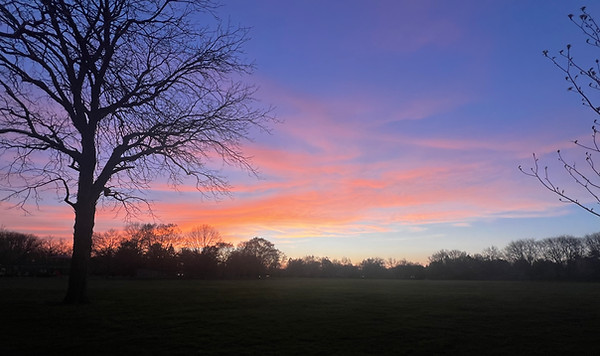
Thompson Park Removed from Consideration – A Win for UA
Monday, May 12, 2025
At today’s school district community meeting at the UAHS Black Box Theatre, we were pleased to hear UACS’ Treasurer Andrew Geistfeld’s official confirmation that Thompson Park is no longer under consideration for the new middle school. This is a meaningful step forward for our community, and we are deeply grateful to all the residents, volunteers, and supporters who made their voices heard in support of preserving this public green space.
While there is more work to be done, this decision opens the door to renewed collaboration with the City to enhance and protect Thompson Park for future use. We will continue to advocate for thoughtful, community-led development that prioritizes green space and public access.
Thank you for standing with us. Let’s keep the momentum going.
As a reminder, there is another Community Meeting tomorrow if you would still like to attend:
-
Tuesday, May 13 from 9:00 to 10:30 a.m at the Graf Center, 2020 Builders Place


About Friends of Thompson Park
We are a group of Upper Arlington residents who share a strong connection to Thompson Park. Some of us have deep roots here—growing up playing on its fields and tennis courts, exploring its wooded trails, and gathering under its shelters. Others have come to love the park more recently, drawn by its beauty, community spirit, and the everyday joy it brings to residents of all ages.
With limited green space in Upper Arlington, we believe Thompson Park is irreplaceable. Its mature trees, wetlands, recreational amenities, and natural beauty are part of our city’s identity. We are committed to preserving the park’s unique character and ensuring it remains a vibrant space for families, nature lovers, and future generations to enjoy.